


If you’ve been considering enhancing your smile, it’s likely that you’ve come across veneers as an option. But did you know there are two different types of veneers?
Both involve applying a thin layer of material to the front of a tooth to hide various imperfections, but they differ significantly in what they’re made of, how much they cost, and what they look like. Let’s dive deeper into veneers so you can make the best decision for you and your teeth.
Materials and How They’re Made
Composite veneers are made from the same material as white tooth fillings, a type of resin. Dentists sculpt it by hand and then cure it in place with a curing lamp.
Porcelain veneers, by contrast, are thin ceramic shells made in a laboratory. At The Mint Dental, we craft them by hand, one layer at a time, using traditional methods. Each veneer is built for the tooth that it sits on top of. We have found that this approach gives a more natural result.
Appearance
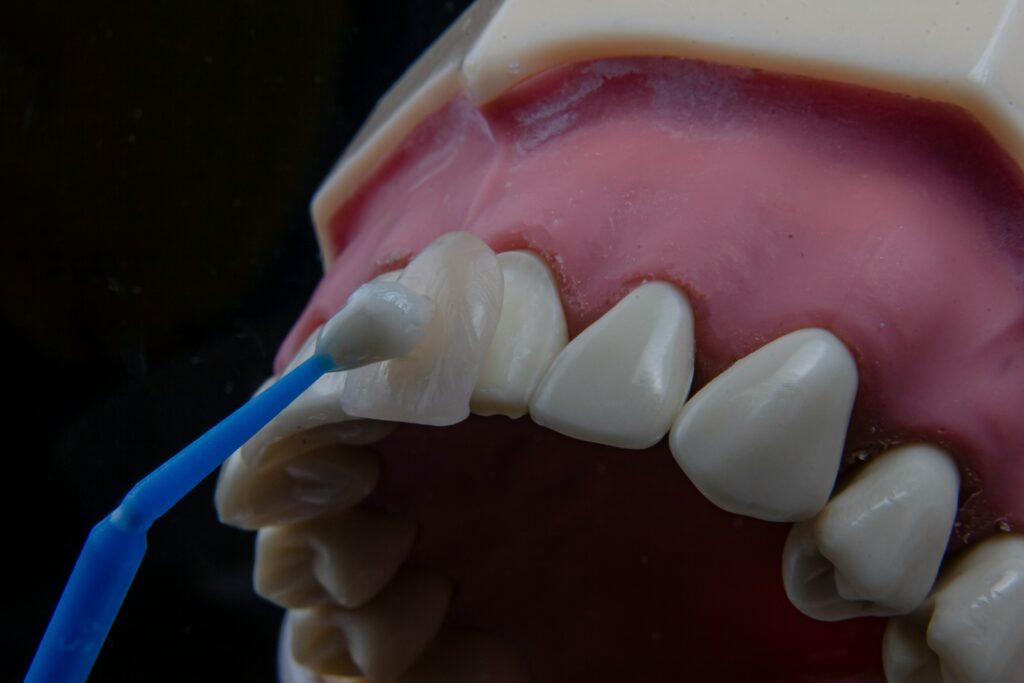
Appearance is the area in which porcelain veneers and composite veneers differ most significantly. Porcelain is translucent, similar to enamel, so the light passes slightly into it and then reflects back out, giving the appearance of regular teeth. Hand-layering the porcelain allows The Mint Dental to give the veneers the desired reflectivity and light absorption properties based on what patients want.
Composites are more opaque and look flatter. They can look good for a single tooth, but they aren’t usually the best option when applying veneers to multiple teeth.
Longevity and Maintenance
Porcelain veneers are harder than regular resin and can resist tannins in things like wine, coffee, berries, and tea. With good care, they can last for 10 years or more. Composite veneers, by contrast, usually only last 4 to 8 years because they’re more prone to chipping and can pick up stains over time. Dentists will sometimes offer to polish or patch them to remove particularly bad discoloration, but this is not effective in the long term.
Pricing
Composite veneers, as you might expect, cost less up front. They don’t require as much lab work, and patients don’t need to make as many visits to the dental clinic.
Porcelain veneers have a larger initial investment, but they tend to be cheaper over the lifetime of the treatment because they don’t need replacing as regularly. In many cases, a single set of porcelain veneers can outlast two sets of composite veneers.
Which Is the Right Choice for You?
Composite veneers make sense for a single chipped tooth or small repairs. They can look good on a single tooth and are inexpensive to replace when the time comes. Porcelain veneers are a better choice if you want to correct a larger number of teeth, particularly those at the front of the mouth. They outlast composite and reflect incoming light better.
Dr. Damien Armstrong at The Mint Dental believes that the cost of premium porcelain veneers is justified because of their high performance. He can handcraft veneers, fit them naturally to the target teeth, and match the color to your existing enamel.
If you’re considering veneers in Chattanooga, TN, The Mint Dental is located at 1405 Cowart St, Suite 101. Call us at (423) 486-9650 to request an appointment.